
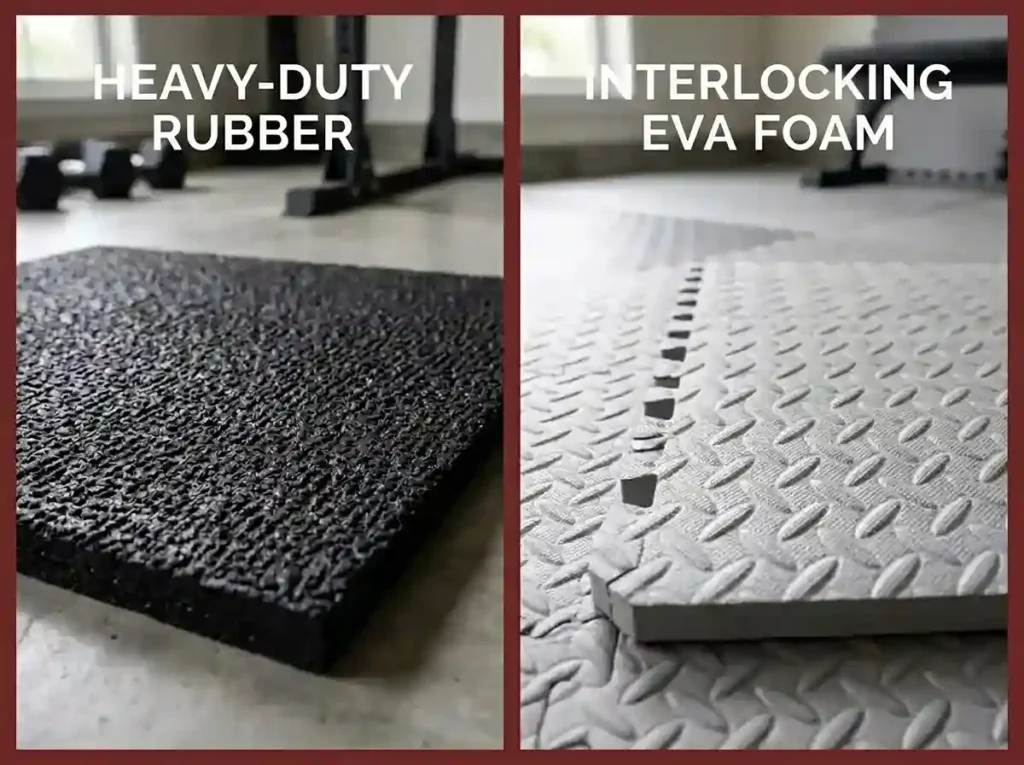
Rubber Gym Mats vs EVA Foam Mats: Comparison Guide For Which Is Better?
Your choice for the right gym flooring is not just about finding something that is soft to stand on. The surface beneath your feet will affect the grip, balance, noise, and equipment stability as well as help protect the flooring underneath. There are two material choices for these mats; one is the rubber and the other is the EVA foam. Both of them work in their own regard but they are ultimately designed to offer different purposes.
Rubber mats offer better density, thickness, and resistance to impacts. As for the EVA foam, it is lightweight to offer better underfoot cushioning and construction. So, which is the right choice? The answer depends on the space usage, which equipment you have, and the impact on the flooring. To make it much clear, we present this comparison of rubber gym mats vs EVA foam mats to let you know which is better.
What Are Rubber Gym Mats?
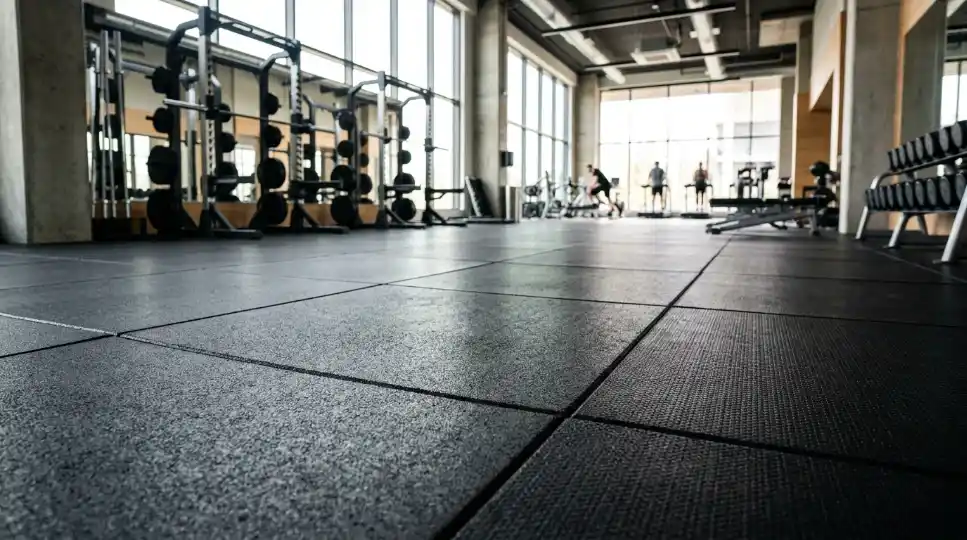
A rubber gym mat is made from either natural or synthetic rubber compounds that make them ideal for fitness applications. These mats come in rolls, tiles, sheets, and interlocking pieces with thickness varying. A thinner option n is suited for general exercising needs while thicker versions suit the high intensity training. Rubber offers high density that gives better underfoot feel and will absorb the impact damage to protect underlying flooring from damage. Rubber also has that natural grip which is further improved by its textured finish.
What Are EVA Foam Mats?
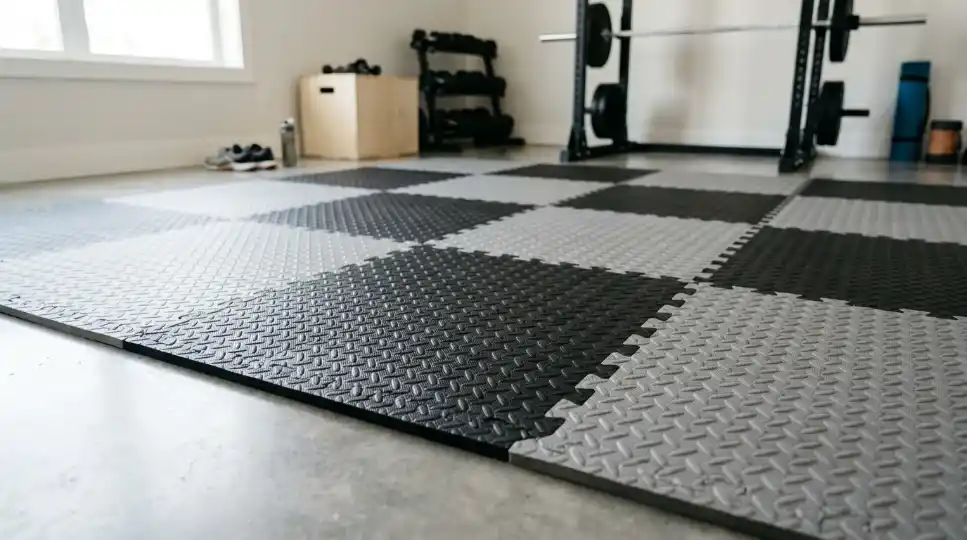
EVA is the ethylene-vinyl acetate which allows it to be molded in closed-cell foam mat easily. They are soft that makes them ideal for exercise flooring, children play area, martial art spaces, and light fitness activities. EVA foam is lighter than the rubber and you can get it in interlocking style for easy fitting, removal, and reconfiguration. The premium benefit is its cushioning that makes it ideal for floor exercises, stretching, yoga, and similar activities.
Comparison Of Rubber Gym Mats vs EVA Foam Mats
This will be a detailed comparison for Rubber gym mats Dubai vs EVA foam mats. With all the points covered, you will have the better decision making to choose the right option.
1.Durability
If durability is your concern, rubber gets the upper hand. Rubber will withstand repeated compression and handle the foot traffic level well. It is able to resist the impact damage from equipment loads and weights dropping on it.
EVA foam mat is susceptible to compression and surface damage due to sharp equipment damage. Still, EVA foam is not a low quality material, instead it makes it ideal for light training areas.
2.Shock Absorption
Both these materials present better impact absorption but they do it in a different way. EVA foam is softer and is able to compress under pressure but this is what gives it a cushioned surface for comfortable exercising on floors.
Rubber happens to be dense and won’t feel soft underfoot. It will absorb and distribute the impact while offering greater structural stability. If it’s for bodyweight training, children activities, and jumping exercises, these mats will offer a stable surface while protecting the flooring underneath.
3.Which Is Better for Weightlifting?
Rubber has a much larger weight lifting capacity because when a barbell or a dumbbell is dropped, the flooring must tolerate the impact on it. Rubber’s high density and resilience allows it to handle the stress better. Thick rubber tiles are designed for weightlifting mats to allow better protection for the flooring and equipment. EVA foam is not the first choice for heavy strength training as repeated impact can damage the foam itself. It will also greatly compress under the weight of racks, benches, and machines.
4.Comfort Level
EVA foam shines at this point, you get ideal standing, lying, and jumping; all the points where your body is directly against the floor. All the exercise movements like stretching, sit-ups, mobility exercise, and floor-based workout can feel much more pleasant. Rubber provides cushioning but its dense structure results in a firmer feel. For the mixed home gym use, the best approach is to place rubber mats under the equipment and get the EVA foam mat for dedicated workout session.
5.Noise Reduction
Both these mat materials will allow for better noise control on concrete or marble flooring. Rubber has a high density count which allows for fewer vibrations from the impact and moving equipment to pass through it. This makes it perfect for use in commercial gyms that are on an upper level of a building. EVA foam will offer better noise control from footstep to light exercise. So, in case you worry about the sound of weights, we recommend getting a thick flooring.
6.Installation
EVA foam wins in this comparison of installation ease. Most of these EVA mats come in lightweight tile formats that you can assemble without needing any tools. This also makes it easier to remove them when the room is changed; a perfect option for temporary gyms or use in rented properties. Rubber tiles come with interlocking edges but they are much heavier than foam tiles. Rubber rolls need you to do a proper surface preparation as well, including cutting & handling.
7.Maintenance & Cleaning
Both these mat materials are easy to maintain but the cleaning method must match with the manufacturer’s guidelines. Rubber can be swept over or vacuum cleaned with right floor cleaning solution. Excessive water must not be left sitting under the flooring itself. EVA foam’s closed cell structure will not absorb water which makes its cleaning simple. Its soft surface is susceptible to cleaning chemicals and abrasive cleaning equipment. No matter the material, you need to do proper, daily cleaning because sweat, body oils, and dust will accumulate rather quickly.
8.Moisture Handling
An EVA is a closed cell material that will resist water absorption naturally that makes it perfect for exercising areas as well. Rubber is also a naturally resistant material but will perform better based on its backing layer, seams, and fitting method. Neither of these materials must be regarded as a proper drainage system and if there is water standing underneath these mats, it should be cleaned immediately.
9.Outdoors Use
Outdoor areas have different work requirements as the outside weather includes rain, humidity, and dirt that affects the flooring material. Some rubber mats are ideal for outdoor spaces where they allow better durability and underfoot traction. EVA foam mats will offer a temporary floor protection but it will brittle and deteriorate under the extreme sunlight exposure. This is why not every type of outdoor mats are perfect for gym use.
10.Safety & Slip Resistance
Floor Traction plays a key role in any workout space with rubber offering best grip, especially with textured surfaces. EVA foam provides better traction but the performance will depend on the smooth or worn down foam. The floors on which you are placing these mats must be free from any debris or unevenness to allow for better underfoot grip.
Rubber vs EVA: Quick Comparison
This here is a simple comparison table for Rubber VS EVA foam to help you make the better decision for choosing the right gym mat option.
| Feature | Rubber | EVA Foam |
| Heavy weights | Excellent | Limited |
| Impact resistance | Excellent | Moderate |
| Cushioning | Good | Excellent |
| Floor exercises | Good | Excellent |
| Equipment stability | Excellent | Moderate |
| Noise reduction | Excellent | Good |
| Installation | Moderate | Easy |
| Portability | Low | Excellent |
| Long-term durability | Excellent | Moderate |
| Outdoor suitability | Product-dependent | Product-dependent |
| Maintenance | Easy | Easy |
| Cost | Moderate to high | Low to moderate |
Which One Should You Choose?
The ideal material will depend on what happens in your gym. You should choose the rubber mat to create a stable weightlifting areas, commercial gyms, garage gyms, or training spaces with heavy machines. These mats feature density, impact resistance, stability, and long service life. And, if you a floor covered surface for light workout needs like yoga, Pilates, mobility exercises, and bodyweight movement exercises. These two materials can be combined in a single product, featuring a foam surface and a rubber backing for comfort and support.
For a custom gym mat in either rubber or EVA foam option or even a combined build, you need to consult with a reputed mat supplier. One such supplier for custom rubber gym mats or EVA foam mats is duabirubbermats.com. They offer the best material options in custom sizes, shapes, and thickness variety for your diverse exercising needs.
Final Verdict
Rubber gym mats vs EVA foam mats; which is better; the answer depends on your general gym type and usage requirements. Rubber offers durability, stability, and impact resistance whereas EVA foam will focus on cushioning, comfort, and portability. The ideal choice will depend on your workout type. Once you compare all the factors of these two mats, you can make the ideal choice to protect your gym floors and improve exercising effects.
FAQs
1.Are rubber floor mats better for heavy weight lifting?
Yes, the dense rubber compound design of these mats will offer better impact resistance, stability, and vibration control. They will protect the underfloor concrete from damage.
2.Is EVA foam mat suitable for home gym use?
Yes, for a light exercising needs like yoga, stretching, Pilates, and bodyweight exercises, you can get the closed-cell structure foam mat.
3.Which is the durable gym mat material?
Rubber is generally is the ideal choice with its long service life because its higher density will prevent compression, tearing, and impact damage.
4.Can I get a mat with both rubber and EVA foam materials?
Yes, you can get an EVA foam mat with a rubber backing layer. The foam surface offer cushioned underfoot feel while the rubber backing will offer stability.
5.Can I use rubber mat for outdoor gym area?
Yes, you can get the UV-resistant rubber products to handle the outdoor conditions. They offer better temperature stability as well as sunlight & moisture resistance.

