How Much Do Rubber Mats Cost in Dubai?
Walk into any gym, garage, workshop, or busy kitchen in Dubai and you’ll probably find rubber matting underfoot somewhere. It handles heat and dust well, and holds up under constant traffic in a way cheaper flooring doesn’t. If you’ve started shopping around though, you’ve probably noticed nobody gives you a straight number.
That’s because there isn’t one. Rubber mats come in different thicknesses, sizes, and grades, built for different jobs. A thin mat for a home setup and a thick interlocking tile for a commercial weightlifting floor get called the same thing, but they’re not really the same product and the price reflects that.
What Is the Average Cost of Rubber Mats in Dubai?
Pricing rubber flooring by the square metre, you’re generally looking at somewhere around AED 40 to 150 for most gym and general-purpose applications, with heavy-duty or premium systems running higher.
At the lower end, you’re paying for a thinner mat made from recycled or lower-density rubber, which works fine for light use but won’t take the punishment a thicker mat can over time. Higher up, you’re paying for denser rubber and better shock absorption a gym owner buying flooring for a weights area isn’t paying more for the same thing, they’re getting something built to survive dropped barbells for years.
Delivery, installation, and total area involved shift the final number too quoting 500 square metres for a warehouse gym is a different job than quoting 10 for a home setup.
What Factors Affect Rubber Mat Prices?
Thickness is the obvious one more rubber costs more to produce and ship. Quality matters just as much: virgin rubber costs more than recycled but holds its shape better in Dubai’s heat and lasts longer.
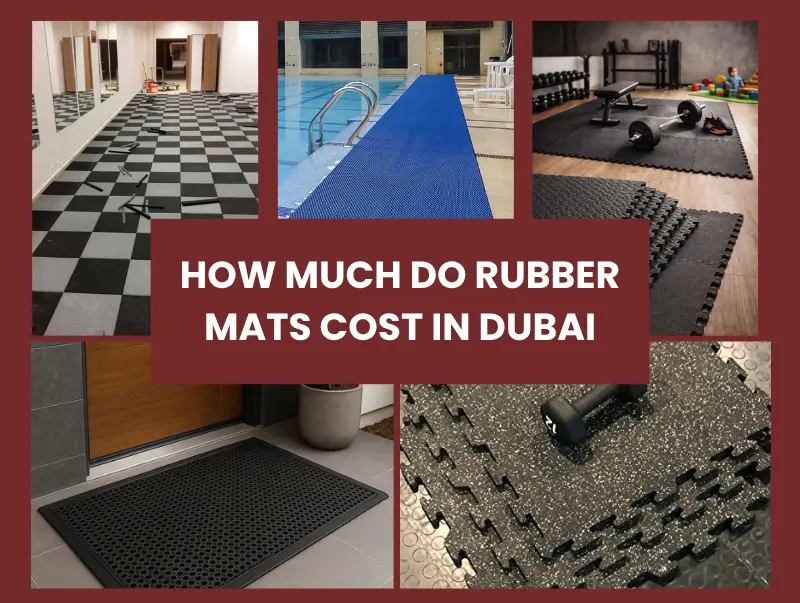
Size and surface pattern matter too. Custom or oversized rolls often cost more per metre than standard tiles, and a flat finish is cheaper than a textured one. Mat type changes pricing as well interlocking tiles, rolled rubber, and individual mats are made differently, and outdoor mats need UV resistance and drainage that indoor ones don’t need.
Bulk orders bring the per-unit cost down, while installation adds to it some mats you lay down yourself, others need professional fitting. Heavy rubber isn’t cheap to move either, so delivery matters too.
How Much Do Gym Rubber Mats Cost?
Gym flooring sits on the higher end, mostly because of what it has to survive. A yoga mat only handles bodyweight; a weightlifting platform needs to absorb dropped plates without cracking.
A home gym in a spare room usually doesn’t need commercial specs moderate thickness, enough to protect the floor and keep the neighbours downstairs happy, is often sufficient. Fitness studios and commercial gyms are different, with high foot traffic pushing requirements up.
Anyone comparing Gym Mats Dubai suppliers will notice pricing shifts between a basic cardio mat and a dedicated weightlifting floor. Local listings commonly show 10mm to 20mm options a 10mm mat suits cardio and light training, while closer to 20mm is built for heavy free weights and drop zones, where the extra rubber does real protective work.
Does Thickness Affect the Price?
Yes, and after quality it’s probably the biggest factor. Thinner mats, under 10mm, suit comfort and noise reduction more than heavy impact think offices, play areas, or light home use. Thicker mats, from 15mm up, suit garages, workshops, and gym areas where dropped weights or vehicle traffic are routine. But the thickest option isn’t automatically the smart buy: a home office doesn’t need industrial-grade flooring. Match the thickness to how the space actually gets used.
Are Rubber Mats Suitable for Wet Areas?
Kitchens, poolside decks, bathrooms, and outdoor spaces all deal with water, and rubber handles it well when it’s the right type. Good matting offers solid slip resistance, which matters around pools and commercial kitchens where a fall is a real risk. Some mats include perforations that let water drain instead of pooling, which helps resist mold in Dubai’s humidity.
Not every rubber mat is a waterproof mat by default, though. The backing, edge sealing, and installation all affect whether it actually keeps water out.
Rubber Mats vs Other Flooring Options
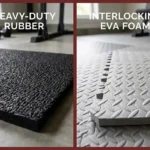
Rubber isn’t the only option, and it isn’t always the right one. EVA foam is lighter and cheaper, popular for home gyms, but compresses faster under heavy weights. Vinyl looks polished and cleans easily, but doesn’t absorb shock the way rubber does. The carpet is quiet and comfortable but a poor choice for gyms or wet areas, since it holds moisture and wears out fast.
Rubber generally wins on durability and slip resistance, but costs more upfront the trade-off comes down to how the space gets used.
How to Choose Rubber Mats Without Overspending
Measure the area properly before requesting quotes guessing the square metreage usually ends in reordering. Think about how the space will be used before picking a thickness, and check rubber quality rather than the price tag alone.
Ask about installation costs upfront, and get more than one quotation. Prices for Rubber Mats Dubai suppliers vary more than people expect, and a second quote often turns up something better. Weigh durability against the lowest price on the page, and confirm the product is rated for your setting before committing.
Final Thoughts
There’s no single price tag for rubber mats in Dubai, and that’s mostly a good thing. It means you can match what you buy to what you actually need, whether that’s a light mat for a home office or heavy-duty flooring for a commercial gym.
Size, thickness, quality, and installation shape the final cost, and prices vary from one supplier to the next. Rather than chasing the cheapest option, compare quality and total cost together. A mat that holds up for years under Dubai’s heat is usually the better investment.