What Is the Best Mat for an Ablution Area?
Busy ablution areas share one obvious problem: water everywhere. Taps run non-stop, feet come and go, and puddles form faster than anyone can wipe them up. The wrong mat won’t contain that water; it creeps onto the surrounding tile, and wet tile is basically an accident waiting to happen.
Durability is another everyday frustration. A mat that can’t hold up traps moisture, starts smelling within a couple of weeks, and looks tired long before it should. The right choice at the start saves a lot of grief later.
What Makes a Good Ablution Area Mat?
A handful of things separate a mat that actually works from one that turns into a chore.
Water resistance is the obvious one: the mat should shed water, not soak it up. A mat that holds water on its surface is arguably worse than having no mat at all.
Grip matters just as much. You want a textured or ridged surface, something that gives bare or sock feet a bit of traction even when it’s soaked through.
Drainage tends to get overlooked, but it makes a real difference. A mat that lets water pass through instead of pooling on top just stays safer between cleanings.
Cleaning ease matters just as much. A mat that can’t be rinsed or hosed down in a couple of minutes probably won’t get cleaned often enough, and grime builds up fast.
Comfort underfoot is worth thinking about too. People often stand in one spot for a minute or so while washing, and bare tile isn’t exactly pleasant. A bit of cushioning goes a long way.
Durability, resistance to mold, and basic sizing shouldn’t be ignored either. Too thin and it wears through quickly. Too thick and it becomes a trip hazard right where people are walking.
Which Type of Mat Is Best for Ablution Areas?
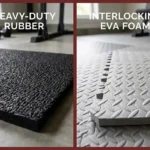
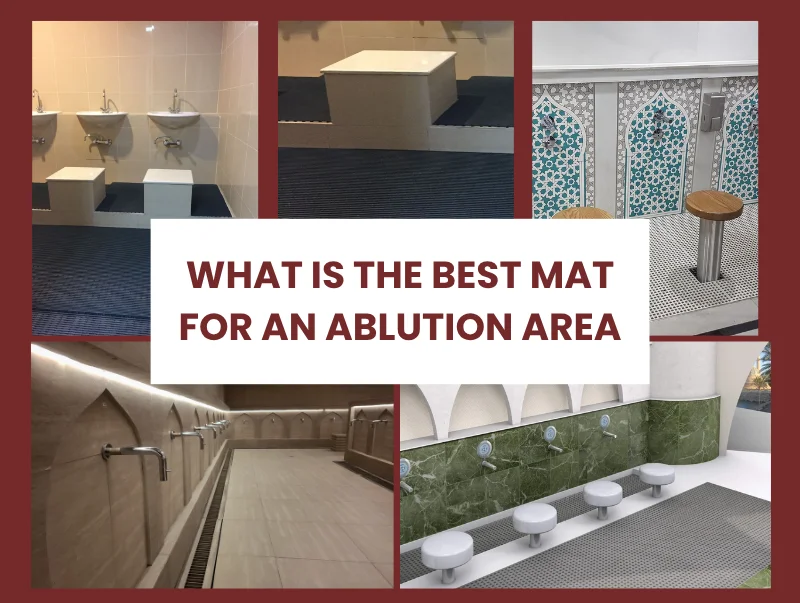
Rubber is what most people end up choosing for wet, high-traffic spots, and for good reason. It grips well, holds up to constant footsteps, and doesn’t absorb water the way softer materials do. Picture a textured rubber mat sitting at the entrance of a mosque washroom; it takes hundreds of footsteps a day and barely shows it.
PVC or Vinyl Mats
These are lighter and usually cheaper than rubber. They wipe down easily and handle water fine, though they can feel a little stiffer underfoot and don’t always grip as confidently once things get really wet.
Drainage Mats
Holes or a raised, slatted design let water drop straight through instead of sitting on top. In spaces where taps run more or less all day, this keeps the floor underneath noticeably drier between cleanings.
Fabric or Absorbent Mats
A drying spot a few steps away from the taps is where fabric mats do fine, but the area right where the water hits is a different story. The material soaks it up fast, stays damp for hours, and starts smelling if it never gets a proper chance to dry.
A rubber mat with drainage is hard to beat, if you’re picking just one option. It grips, it resists water, and air can move underneath something a fabric mat simply can’t manage in a space that stays wet most of the day.
Why Slip Resistance Matters
Wet tile is sneakier than people expect, and ablution areas get used by everyone: elderly worshippers, kids, people in a hurry before prayer. A textured or ridged mat breaks up the thin film of water under a foot, which gives a far more secure step even when the surface underneath is soaked. Slip resistance is a small feature, but it prevents more accidents than you’d think.
Is a Waterproof Mat Better for an Ablution Area?
Water-resistant and waterproof sound similar but aren’t the same thing. Water-resistant means the mat can handle a splash here and there, though it might slowly soak up moisture over time. A waterproof mat goes further: water doesn’t get into the material at all, so it stays lighter, dries quicker, and won’t build up that damp, musty smell that absorbent mats tend to develop.
Waterproof is the smarter pick for a space that deals with running water several times a day. It also means no warping, no curling, and no mold growing inside the mat where you can’t see it.
How to Keep an Ablution Mat Clean
Even a good mat needs some upkeep to actually stay good.
- A proper rinse after busy periods matters, especially in high-traffic spots like mosques or gyms.
- Lifting it now and then clears out dirt, hair, or grit hiding underneath.
- Full drying is worth the wait, rather than leaving it folded up wet in a corner.
- The floor underneath shouldn’t be forgotten; moisture sits there too, even when the mat looks dry.
- Mold, discoloration, or a musty smell are worth watching for. That’s usually a sign it needs a deep clean, or replacing.
- A flattened surface or faded grip means it’s time to swap it. A worn-smooth mat isn’t doing its job anymore.
How to Choose the Right Size and Design
Actual measurements beat guesswork every time. Too small and you’ll get gaps where water pools straight onto the tile; too large and it bunches up awkwardly near doorways.
Foot traffic matters too. A busy washroom in a mosque or public facility usually does better with one long runner-style mat covering the whole walking path, rather than a scattering of small mats near each tap.
Drainage needs and available floor space matter here as well. In a tighter layout, a thinner mat with drainage holes tends to fit and perform better than something bulky.
Common Mistakes to Avoid
A few slip-ups come up again and again.
An absorbent mat that soaks up water instead of shedding it is probably the most common one. A slippery backing is another mat that slides around underfoot can honestly be more dangerous than skipping a mat entirely.
Something that’s a pain to clean, ignoring drainage altogether, or picking the wrong size round out the list. None of these feel like a big deal on their own, but together they turn what should be a safety upgrade into an ongoing headache.
Final Thoughts
The best mat for an ablution area is one that grips well, resists water instead of absorbing it, drains properly, cleans up fast, and doesn’t fall apart after a few months of daily use. Rubber and drainage-style options tend to tick all of these boxes better than fabric ever will.
Established rubber mat suppliers are worth checking if you’re sourcing for a mosque, gym, or public washroom, since commercial-grade mats are typically built for heavier daily wear. And if you’re searching locally, Ablution Mats Dubai turns up plenty of options suited to the region’s climate and the layouts common in local washrooms. Grip, water resistance, and drainage should be top of the list, whichever option you land on everything else is just extra.